The 15-minute daily decluttering routine
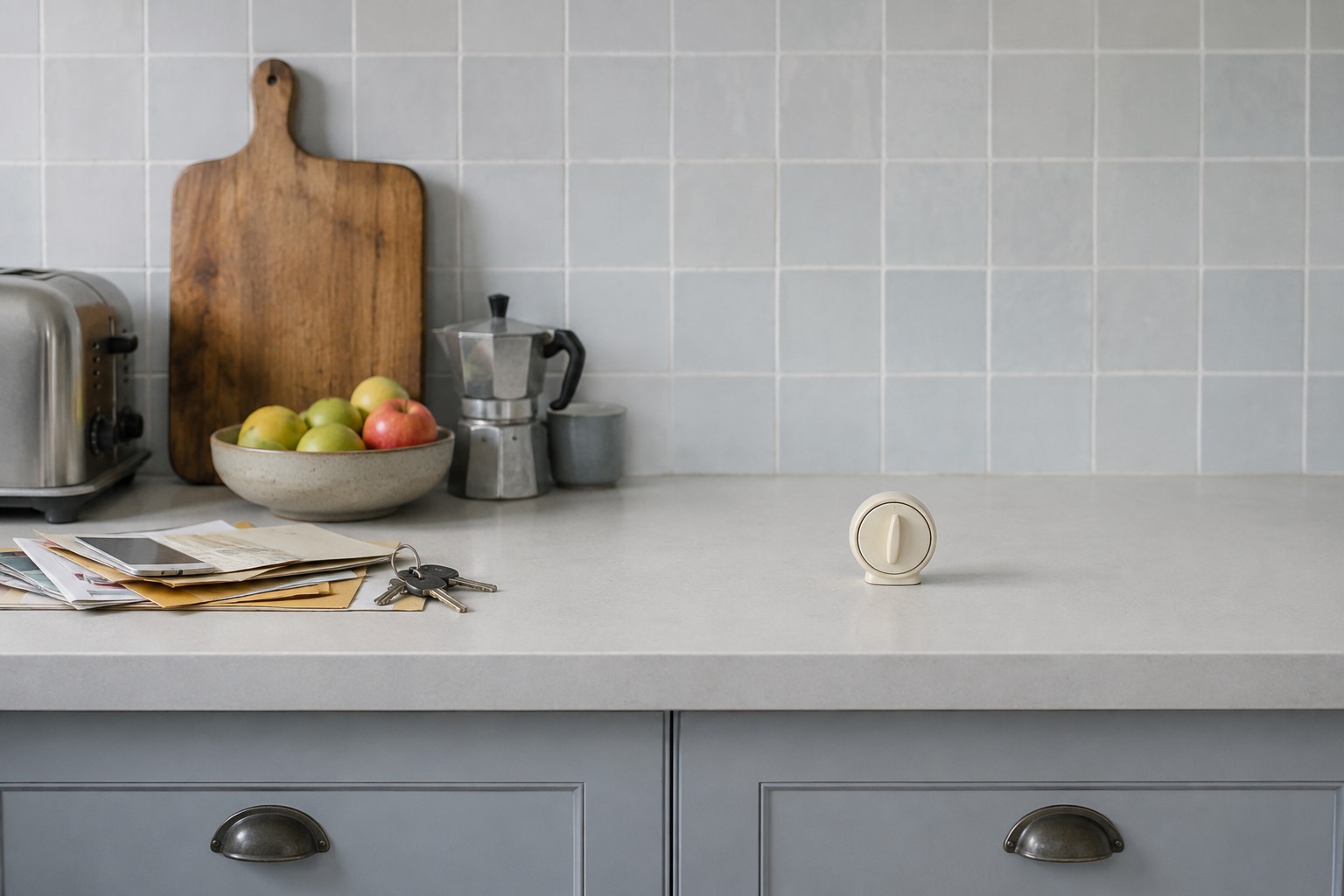
Set a timer for fifteen minutes at the same point every day and run three passes: surfaces you use, things that belong elsewhere, then one small area of your choice. Fifteen minutes a day comes to roughly seven hours a month, which is more than most people manage with occasional weekend clear-outs, and it never requires clearing a day.
Run a 15-minute daily decluttering routine
- Fix the time. Attach it to something you already do daily. After dinner, before a shower, while the kettle boils.
- Minutes 1 to 5, active surfaces. Kitchen counter, coffee table, desk, nightstand. Clear whatever landed there today.
- Minutes 6 to 10, strays home. One lap of the house returning things to the room they live in.
- Minutes 11 to 15, one small area. A drawer, a shelf, one bag. This is where slow progress on the backlog happens.
- Stop at the timer. Even mid-task. Reliability is what makes the routine work, not depth.
Why fifteen minutes is the right size
It is short enough to do on a bad day and long enough to be worth doing. Five minutes rarely reaches the second pass. Thirty starts to need scheduling, and anything that needs scheduling gets skipped when the week is busy.
The consistency is doing the real work. A house does not get cluttered in an afternoon and it does not get uncluttered in one either. Daily maintenance beats intensity in both directions.
Anchor it to an existing habit
Routines fail on the remembering, not the doing. Pin it to something already fixed in your day and the timing decides itself: after the evening meal, before you shower, during the first coffee.
Pick a time when the house is already noticeably untidy. Evening tends to beat morning, because you are clearing the day rather than yesterday.

Three passes, always the same
The order never changes: active surfaces, strays back to their rooms, one small area. Because it is fixed you stop spending the first three minutes deciding what to do, which on a tired evening is most of the difference between doing it and not.
The third pass is the only one that varies, and it is where the backlog gets eaten. One drawer a day is three hundred drawers a year.
What to do when the house is already tidy
Some evenings the three passes take four minutes because nothing accumulated. Do not skip the slot and do not stretch the work to fill it. Spend the remainder on the third pass, which always has something left in it, or stop early and let the routine stay easy.
Easy is the point. A routine that expands to punish you on good days gets dropped within a month. Fifteen minutes is a ceiling as much as a target.
Missing days is part of it
You will miss days. The routine survives that; what it does not survive is deciding that a broken streak means the routine failed, then abandoning it for a month.
The counter in the app is there to show the pattern over weeks, not to be protected. A month at four days a week is a good month.
Questions about 15 minute decluttering routine
Is 15 minutes a day really enough to keep a house tidy?
For maintenance in an average home, yes. It is not enough on its own to clear a large existing backlog, which is what the third pass slowly chips away at.
What is the best time of day for it?
Whenever it will actually happen. Evening suits most people because the day’s clutter is already out, but a fixed morning slot works just as well if that is when you have energy.