How to declutter when you feel overwhelmed
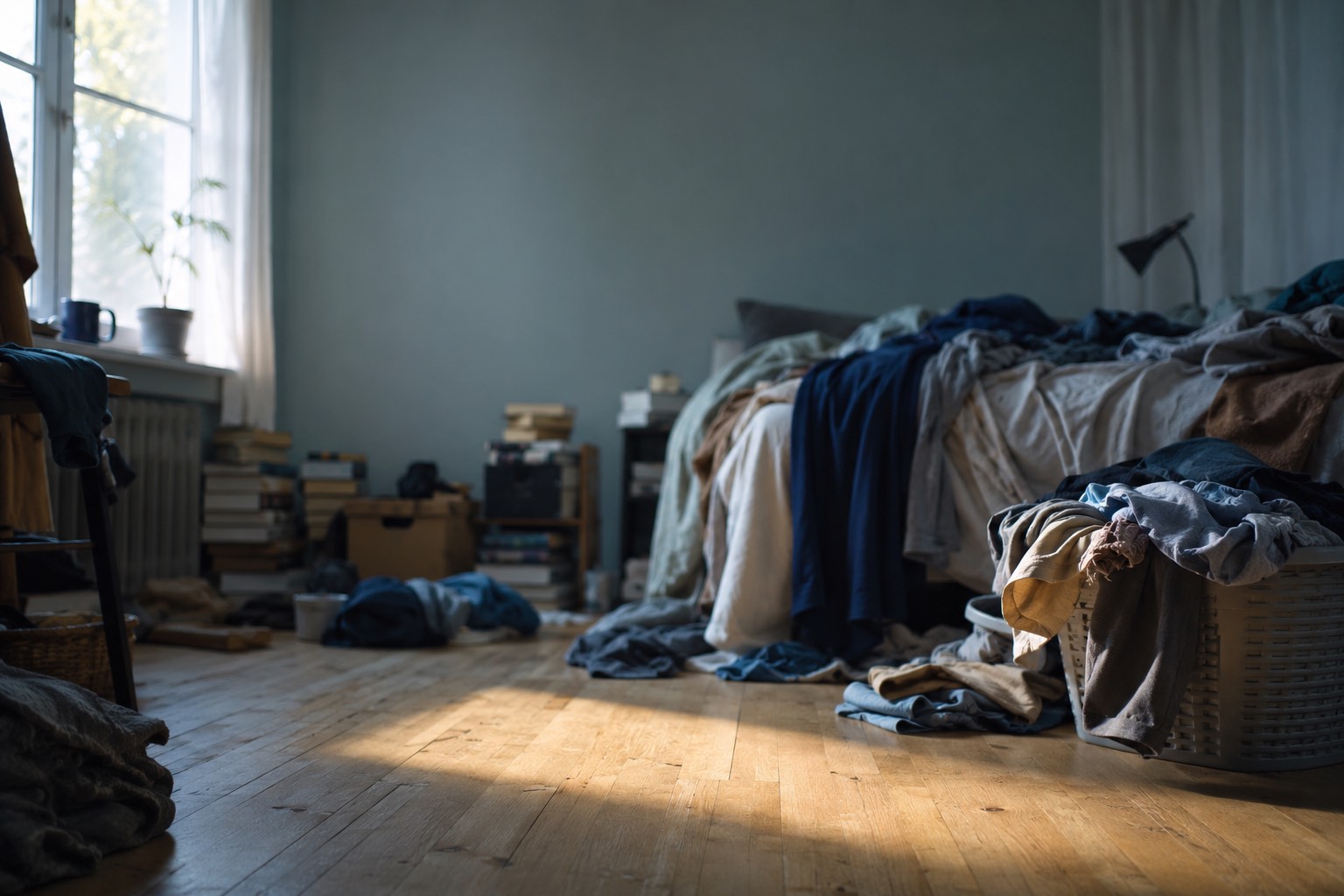
Pick one room, close the door on the rest of the house, and spend the first ten minutes collecting nothing but trash. Trash requires no decisions, and decision-making is the part that has you stuck. Once the trash bag is full the room looks measurably better, and that visible change is usually enough to keep you going.
Declutter a room when you feel overwhelmed
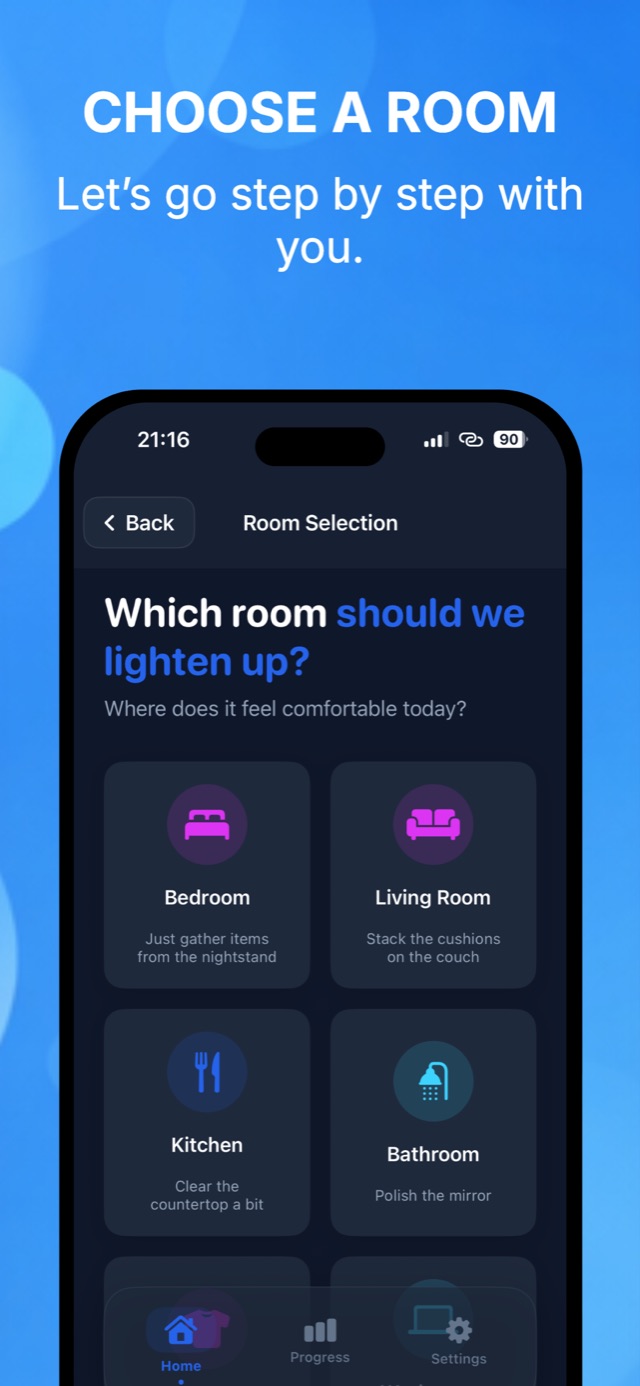
- Choose one room and shrink the target. Pick the room you spend the most time in, then pick one small patch of floor inside it. That patch is the whole job for now.
- Collect trash only. Ten minutes, one trash bag, no sorting and no decisions. Wrappers, packaging, dead pens, empty bottles.
- Gather what belongs elsewhere. One box for everything that lives in another room. Do not leave the room to put anything away yet.
- Clear the largest flat surface. Bed, table or desk. A clear horizontal surface changes how the room reads more than any drawer.
- Stop on time. End the session at the timer, not at perfection. An unfinished room you can face tomorrow beats a burnout day.
Why the mess freezes you
Overwhelm is not laziness and it is rarely about the objects. A cluttered room presents dozens of small unresolved decisions at once, all competing for the same attention. Your brain reads that as one enormous task with no obvious entry point, so it does the sensible thing and avoids it.
The fix is structural rather than motivational. Reduce the number of open decisions in front of you and the task stops feeling enormous. Every method that works, from the five-things approach to the ten-minute timer, is doing the same underlying thing: cutting choice down to one.
Shrink the target until it is boring
People pick targets that are too big. "Tidy the bedroom" is a project. "Clear the top of the nightstand" is a task you can picture finishing, and picturing the finish is what lets you start.
If a patch of floor still feels like too much, go smaller. One shelf. One chair with clothes on it. The size of the first step matters far more than the size of the room, because nothing else happens until the first step does.
Work in a fixed order so you stop deciding
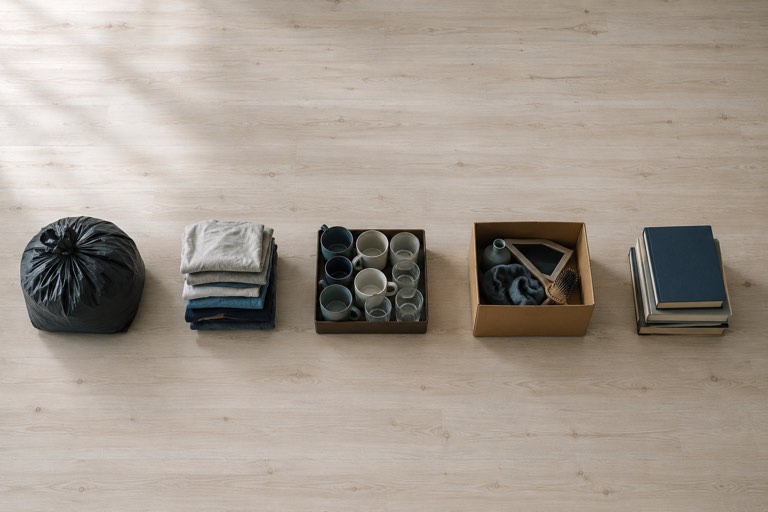
Trash first, then dishes and laundry, then things that have a home, then things that do not. That order is deliberate. The first two categories need no judgement at all, so they build momentum before you reach anything sentimental.
Keep a single box for items that belong in other rooms and do not carry them out mid-session. Leaving the room is how a decluttering session turns into three hours of wandering with a mug in your hand.
Set an end, not a goal
Fifteen minutes on a timer is a commitment you can keep on a bad day. "Until it is done" is not, and failing it teaches you that decluttering is something you fail at.
Stop when the timer goes, even mid-pile. The room will not be finished. It will be better, you will have proof you can do it, and tomorrow's session starts from a lower baseline.
What to do with the pile you cannot decide about
Some objects genuinely stall you: gifts, hobby equipment you might return to, clothes for a body you had or want. Put all of them in one box, write the date on it, and move on. You are not deciding today.
Revisit the box in three months. Whatever you have not needed by then is easier to let go of, because the decision has stopped being hypothetical.
Questions about how to declutter when overwhelmed
How long should a first decluttering session be?
Fifteen minutes is enough to change how one surface looks and short enough that you will actually start. Longer sessions are fine once the habit exists, but they are a bad way to begin.
Should I buy storage boxes before I start?
No. Buying storage is a very convincing way to postpone decluttering. Get rid of what you do not want first, then see what actually needs storing.