Where to start decluttering your house
Start in the room you spend the most waking time in, and inside it start with the largest flat surface. Not the loft, not the garage, not the closet full of decisions. You want the first hour of work to be somewhere you will sit and look at afterwards, because seeing the result is what funds the second hour.
The worst places to begin
Lofts, garages, spare rooms and storage boxes are where most whole-house declutters die. They are dense with sentimental objects, you rarely see the improvement, and a bad afternoon among old photographs can end the project for a year.
Closets are nearly as bad for a different reason. Clothes carry judgements about your body and your past, so a decision that should take two seconds takes two minutes. Leave them until decluttering feels routine.
A running order that works
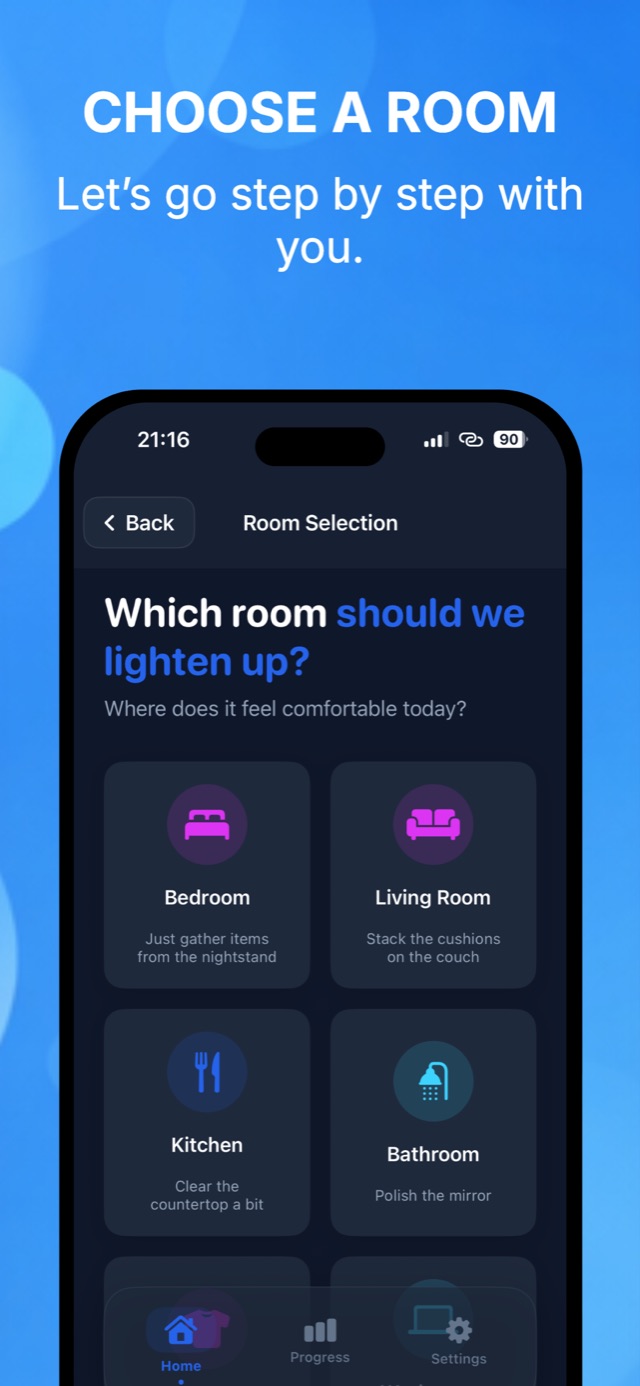
Kitchen counters, then the living room coffee table and sofa, then the bedroom nightstands and floor, then the bathroom counter, then the hallway drop zone by the door. These are the surfaces that collect things daily, so they refill fastest and reward you fastest.
Only after those, move to contained spaces: drawers, cupboards, the closet, then storage. By then you have made a few hundred keep-or-go decisions and they take a fraction of the time they did in week one.
Finish a room before you open another
Four half-decluttered rooms feel worse than four untouched ones, and the house looks like it is getting worse while you work. Close out one space, including taking the donations to the car, before you start the next.
"Finished" here means the visible surfaces and floor, not every drawer. Depth comes on a second pass, once every room in the house has had its first.
Decide where the things go before you start
Three destinations, ready before the first object moves: a trash bag, a donation box, and a box for things that live in another room. Without them you will make a keep-or-go decision and then have nowhere to put the answer, and the pile just relocates.
Put the donation box in the trunk of the car the same day. Boxes that sit by the front door for a month have a way of being unpacked again.
Deal with other people’s things separately
In a shared home, roughly a third of the clutter belongs to someone else, and throwing out their things is the fastest way to end the project and start an argument. Put anything of theirs in a box with their name on it and hand it over.
Your own areas are enough to work with for the first pass: your side of the closet, your desk, your shelf in the bathroom. Shared spaces go better once the household can see what the result looks like.
How long a whole house takes
For an average two-bedroom home at three or four sessions a week, a first pass over every room takes about six weeks. That is slower than the weekend transformations on television and much more likely to survive.
Track the days you did it rather than the rooms remaining. Six weeks of small sessions is a habit, and the habit is what keeps the house from filling back up.
Questions about where to start decluttering your house
Should I declutter room by room or by category?
Room by room is easier to sustain, because each session has a visible finish. Category methods that pull every item of one type into one pile work well for people who already declutter comfortably, and overwhelm most people who do not.
How long should I spend decluttering each day?
Fifteen to thirty minutes, most days, beats a four-hour session at the weekend. The short version is repeatable and does not require you to clear a day.