How to clean when you are depressed
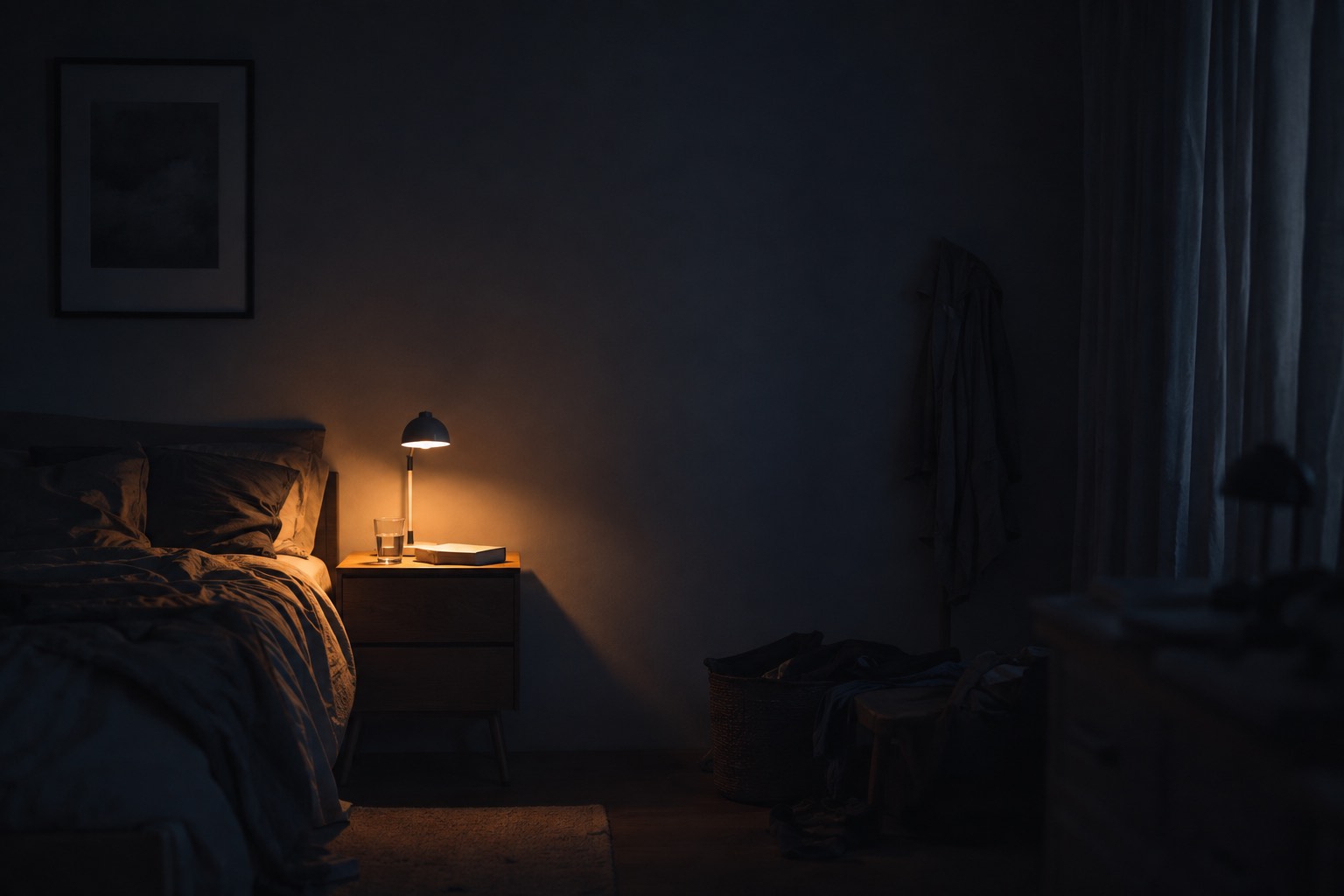
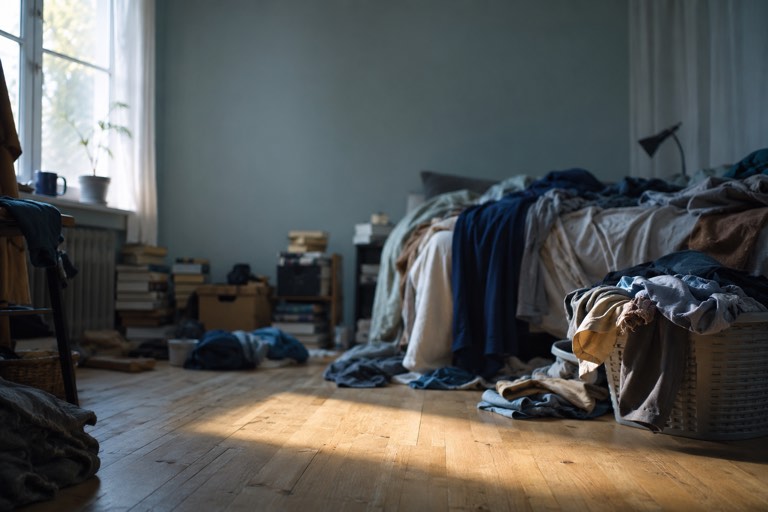
Choose one thing that takes two minutes, do it, and stop. Not the room, and not even a whole surface if a surface is too much. Take the cups to the kitchen, or put the clothes on the chair into the basket. During a depressive period the aim is not a clean home, it is keeping the room from getting worse while you have very little to spend.
Lower the standard on purpose
Most cleaning advice assumes a baseline of energy you do not currently have. Measured against that baseline, doing anything at all looks like failure, and that judgement costs more than the cleaning would.
So change what counts. Today, success is the cups. Tomorrow it might be the floor by the bed. Neither is a compromise version of a real clean. On a low day they are the whole job.
Start with what affects how the room feels
Food waste, dishes, laundry and trash are worth doing first because they change the air in a room rather than its appearance. A room that smells stale keeps telling you something is wrong, long after you have stopped noticing the visual mess.
Everything decorative can wait indefinitely. Nobody has ever felt better because the books were straight.
Make the decision somewhere other than your head
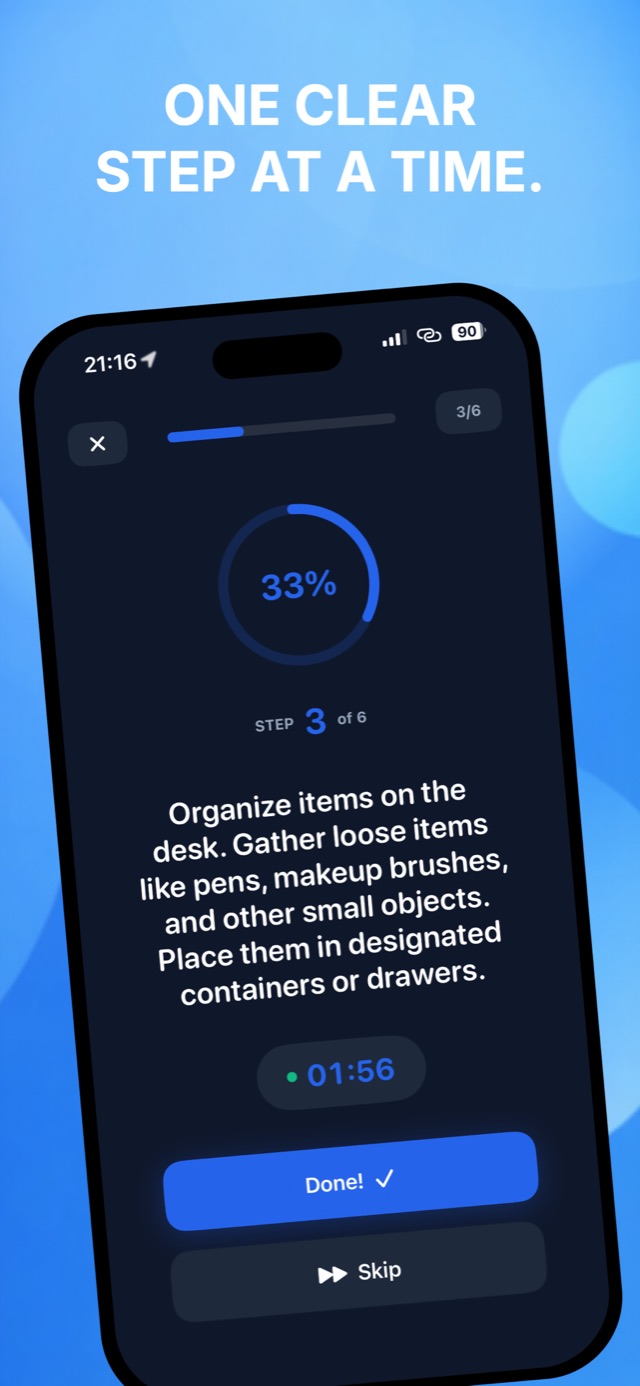
Depression flattens the ability to sequence and choose, which is why the room stays messy even on days you want it clean. Anything that hands you a decided next action helps: a written list from a better day, a friend on the phone, an app that reads the room and tells you what to do.
Micro-task mode exists for this. Ask for the two-minute version, do the one thing it names, and let the app count the session as finished.
Ask, if you can
Having someone in the room changes the difficulty more than any technique. They do not have to clean. Sitting on the bed talking while you fill a trash bag is enough, which is the same mechanism behind body doubling.
If asking feels impossible, a video call with the camera pointed at the floor also works. So does a livestream or a long phone call. The point is not being alone with it.
Reduce what the room asks of you
A low-energy period is a bad time to maintain a system that assumed a higher one. If the laundry basket lives in another room, put one where the clothes actually land. If dishes pile up because the sink is full, keep a small stack of plates out and wash those.
Leaving a trash bag in the bedroom for a week is not a failure of standards. It is a reasonable adjustment that stops trash accumulating on the floor while you have nothing spare to give.
These changes usually outlast the bad period, and they mean the room recovers faster the next time one arrives.
When it is not really about the cleaning
A room that has been unmanageable for months, alongside sleep, appetite or energy that have changed, is worth mentioning to a doctor. Cleaning apps and checklists help with the mechanics of a bad week. They are not treatment.
Declutter is a tool for getting a room back, not a mental health service. Use it for the part it can do and get support for the rest.
Questions about how to clean when depressed
What is depression cleaning?
It describes cleaning done in very small pieces during a depressive period, judged by whether anything got done at all rather than by how the room ends up. Doing one two-minute task is the intended outcome, not a partial version of a real clean.
Where do I start if the whole house is bad?
Start with anything that smells: trash, dishes, food waste, laundry. It costs the least attention and changes how the space feels faster than tidying does.